Choosing the right Distribution Board can shape a building’s safety, uptime, and maintenance cost. Global buyers face different voltages, enclosure requirements, installation practices, and certification expectations. A board designed for a dry office may fail in a humid processing plant.
Mike Holt, a respected electrical educator, offers a simple warning: “Electricity is unforgiving.” That principle matters when comparing main distribution boards, consumer units, modular boards, and motor control distribution systems. Buyers should examine rated current, short-circuit withstand capacity, ingress protection, busbar design, cable space, and future circuit capacity. A crowded enclosure is not a clever saving.
Standards matter too. IEC 61439 compliance can support safer low-voltage assembly verification, while local requirements may still influence testing and documentation. Do not assume one certificate satisfies every market. Confirm frequency, phase arrangement, earthing system, breaker compatibility, and available replacement parts before placing an order.
The best choice is rarely the cheapest box. It is the board that fits the site, load profile, climate, and service plan. Small details count. Clear labels. Strong hinges. Accessible terminals. Reliable fault isolation.
Some buying decisions remain imperfect. Product data can be incomplete, and supplier claims deserve careful review. A technical drawing may look convincing but hide poor cable routing or limited expansion space. This guide compares the 2026 best Distribution Board types for global buyers, using practical selection criteria, verified technical information, and realistic installation concerns. Safety should lead. Convenience should follow.
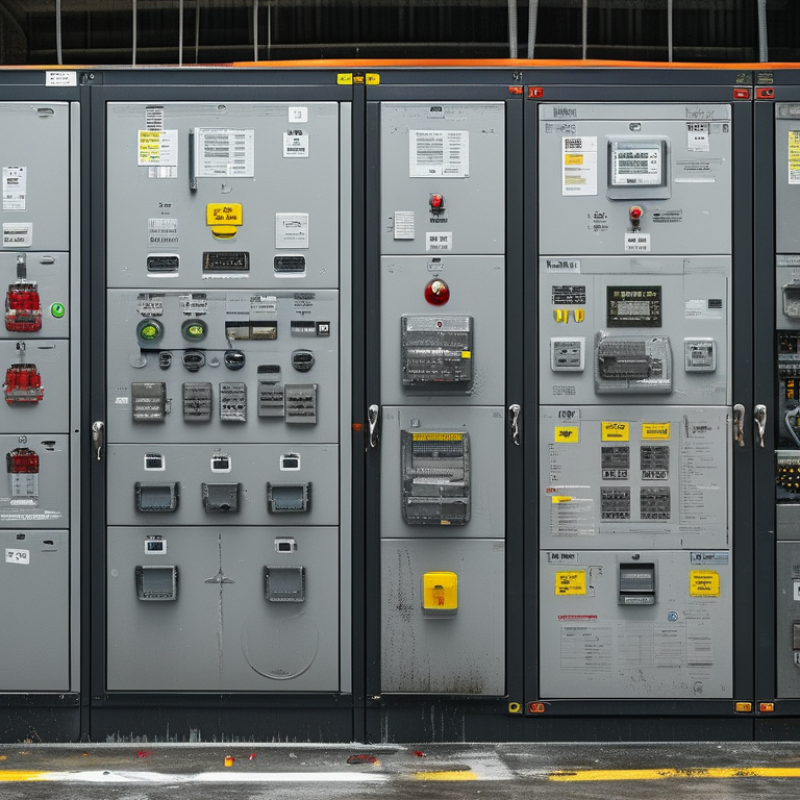
A distribution board is the electrical control point for a building, workshop, or facility. It receives power from the main supply and divides it into safer outgoing circuits. Each circuit usually has protective devices, such as circuit breakers or residual-current protection. These devices disconnect power during overloads, short circuits, or leakage faults.
Inside the enclosure, busbars distribute electricity between protective devices. Neutral and earth terminals complete the circuit and support safe fault handling. The board also allows technicians to isolate one area without shutting down the entire property. IEC 61439 defines important requirements for low-voltage assemblies, including temperature rise, insulation, and short-circuit performance. The IEA’s Electricity Grids and Secure Energy Transitions report states that annual grid investment must exceed 600 billion US dollars by 2030. This growth increases demand for reliable distribution equipment, but capacity alone is not enough. Poor labeling and crowded wiring still create avoidable risks.
Tips: Match the board’s rated current, fault level, enclosure rating, and circuit count to the installation. Leave practical spare capacity. A neat board can still be poorly designed. Field checks should confirm torque settings, cable sizes, phase balance, and protective coordination. Local rules may also require qualified inspection. This part is often underestimated.
2026 Best Distribution Board Types for Global Buyers
Different electrical systems need different distribution boards. For commercial buildings, low-voltage main distribution boards handle incoming power and feed floor-level boards. Final distribution boards then protect lighting, sockets, and small equipment. Industrial sites often require motor control centers, which separate motor feeders and simplify maintenance. Data centers may need dual-source boards, automatic transfer equipment, and carefully segregated critical circuits.
The International Energy Agency’s Electricity 2024 report expects global electricity demand to grow by an average 3.4% annually from 2024 to 2026. This growth increases pressure on reliable protection, selective coordination, and expansion capacity. Meanwhile, the IEA’s Renewables 2024 report forecasts nearly 5,500 GW of renewable capacity additions by 2030. Solar and storage projects therefore need AC distribution boards, DC combiner boards, and boards designed for bidirectional power flow. Do not assume a standard panel works everywhere. Voltage, frequency, earthing method, fault level, enclosure rating, and local installation rules can change the specification.
Tips: Confirm the system voltage and short-circuit rating before requesting quotations. Ask for IEC 61439 verification documents, temperature-rise data, wiring diagrams, and routine test records. Leave spare ways for future circuits, but avoid oversized enclosures that complicate cooling and maintenance. A practical review is essential; catalog descriptions alone can be misleading.
Choosing the right distribution board for global projects requires more than comparing current ratings. Project conditions can vary widely between regions. Start with the supply voltage, frequency, phase arrangement, and expected fault current. Confirm these details with the local electrical engineer before selecting equipment. A board suitable for an indoor factory may fail in a humid coastal facility. Enclosure protection, ventilation, corrosion resistance, and ambient temperature all matter.
Tips: Create a project data sheet before requesting quotations. Include incoming cable size, outgoing circuit count, spare capacity, installation location, and maintenance access. Check whether the board supports the required protective devices and metering functions. Leave practical space for future circuits. It is cheaper than rebuilding an overcrowded panel.
Field inspections often reveal simple problems, such as unclear circuit labels or doors blocked by nearby equipment. These details affect safety and maintenance speed. Verify busbar insulation, earthing arrangements, short-circuit withstand ratings, and temperature-rise performance. Ask for test records, wiring diagrams, and material specifications from qualified manufacturers. Independent inspection can add confidence, especially when production downtime would be costly. However, documentation is not perfect. A neat drawing may still hide poor cable bending space. Review the physical layout, not only the paperwork. Local installation practices also deserve attention, because a technically correct design can remain difficult to operate on site.
| Distribution Board Type | Typical Application | Typical System Voltage | Typical Rated Current | Common Enclosure Protection | Main Incoming Device | Typical Outgoing Circuits | Key Advantages | Main Selection Considerations | Common International Standards |
|---|---|---|---|---|---|---|---|---|---|
| Residential Consumer Unit | Houses, apartments, small residential buildings and light domestic loads | 230/400 V AC, depending on the local electrical system | 40–125 A | IP20–IP40 | Main switch, RCCB or RCBO | 6–24 final circuits for lighting, sockets, cooking and heating | Compact design, easy circuit identification and strong protection against electric shock when residual-current protection is correctly applied | Local earthing system, number of ways, available fault current, neutral arrangement and residential wiring regulations | IEC 61439-3, IEC 60364, IEC 61008 and IEC 61009 |
| Commercial Lighting and Power Board | Offices, retail stores, schools, clinics and small commercial premises | 230/400 V AC | 100–400 A | IP30–IP54 | MCCB, switch-disconnector or incoming circuit breaker | 10–48 outgoing circuits for lighting, socket outlets, HVAC and small equipment | Supports separated lighting and power circuits, easier maintenance and flexible circuit expansion | Load diversity, heat dissipation, cable entry, spare capacity, discrimination and accessibility requirements | IEC 61439-2, IEC 61439-3 and IEC 60364 |
| Industrial Power Distribution Board | Factories, workshops, warehouses and production facilities | 400/415 V AC is common; project-specific systems may differ | 250–1,600 A | IP54–IP65 | Air circuit breaker or high-capacity MCCB | Multiple feeders for motors, machinery, process equipment and sub-distribution boards | High fault withstand capability, robust construction and compatibility with demanding industrial loads | Short-circuit current, motor starting current, thermal rise, busbar rating, cable termination and maintenance access | IEC 61439-1, IEC 61439-2 and IEC 60947 series |
| Motor Control and Distribution Board | Pumps, fans, compressors, conveyors and other motor-driven systems | 230/400 V AC or 400/415 V AC, subject to motor design | 160–2,500 A assembly rating | IP42–IP65 | ACB, MCCB or switch-fuse combination | Motor starters, variable-speed drives, overload relays and dedicated motor feeders | Combines power distribution, motor protection, control and isolation in one coordinated assembly | Motor duty, starting method, fault level, harmonic current from drives, ventilation and emergency-stop requirements | IEC 61439-1, IEC 61439-2 and IEC 60947-4-1 |
| Outdoor Weatherproof Distribution Board | Construction sites, outdoor utilities, agricultural facilities and temporary power systems | 230/400 V AC | 63–630 A | IP54–IP66 | Switch-disconnector, RCCB or MCCB | Socket outlets, equipment feeders, lighting circuits and temporary power outlets | Protection against rain, dust and accidental contact when properly installed and maintained | UV exposure, condensation, corrosion, drainage, impact resistance, cable glands and local construction-site rules | IEC 61439-3, IEC 60529, IEC 60364-7-704 and IEC 60309 where industrial plugs are used |
| Energy Metering and Sub-Distribution Board | Multi-tenant buildings, commercial subdivisions and utility monitoring points | 230/400 V AC | 100–630 A | IP30–IP54 | Main switch, MCCB or fused switch | Metered tenant feeders, common-area services and downstream distribution boards | Enables separate energy measurement, transparent billing and easier load management | Metering authority requirements, meter accuracy class, CT ratio, sealing arrangements and communication interface | IEC 61439, IEC 62052 and IEC 62053, subject to the metering application |
| Automatic Transfer Distribution Board | Data rooms, healthcare facilities, emergency systems and critical commercial loads | 230/400 V AC; system configuration depends on the normal and standby sources | 160–1,600 A | IP31–IP54 | Automatic transfer switch with circuit breakers or switch-disconnectors | Critical lighting, emergency equipment, pumps, communication systems and selected essential loads | Transfers selected loads between utility, generator or other approved sources with controlled interlocking | Transfer time, source synchronization, neutral switching, bypass arrangement, generator compatibility and critical-load classification | IEC 60947-6-1, IEC 61439-1 and applicable local emergency-power regulations |
| Power Factor Correction Distribution Board | Industrial and commercial facilities with inductive loads and recurring reactive-power demand | 230/400 V AC or 400/415 V AC | 200–1,600 A | IP31–IP54 | MCCB, switch-fuse or incoming circuit breaker | Capacitor steps, detuning reactors, controller circuits and auxiliary protection | Can reduce reactive-power demand and improve utilization of transformers and cables when correctly designed | Harmonic distortion, resonance risk, load variation, capacitor switching duty, ambient temperature and ventilation | IEC 61439-1, IEC 61439-2 and IEC 60831 for low-voltage shunt power capacitors |
| Photovoltaic AC Distribution Board | Rooftop, commercial and utility-connected solar photovoltaic installations on the AC side | 230/400 V AC or project-specific low-voltage AC system | 125–1,600 A | IP54–IP65 | AC circuit breaker, switch-disconnector and surge protection device | Inverter outputs, grid connection, monitoring and auxiliary circuits | Provides isolation, overcurrent protection and surge protection for inverter-to-grid connections | Inverter output current, backfeed protection, earthing, surge environment, utility interconnection rules and cable routing | IEC 61439-2, IEC 60364-7-712 and IEC 61643-11 |
| Data Centre and Critical-Load Board | Server rooms, telecommunications facilities and other high-availability installations | 230/400 V AC; dual-source arrangements are common for critical loads | 250–2,500 A | IP31–IP54 | ACB, MCCB or maintenance-bypass switching arrangement | UPS outputs, rack power distribution, cooling, fire systems and monitoring circuits | Designed for high availability, selective coordination, monitoring and maintainability | Redundancy topology, short-circuit rating, arc-flash risk, bypass operation, harmonic currents, power quality and maintenance procedures | IEC 61439, IEC 60364, IEC 62040 for UPS-related systems and applicable data-centre standards |
Note: The ratings shown are typical planning ranges rather than universal specifications. Final selection must be verified against the project load schedule, prospective short-circuit current, earthing system, ambient conditions, installation method, local regulations and the applicable edition of each standard.
For global buyers, distribution board selection starts with standards, not appearance. IEC 61439 covers low-voltage switchgear assemblies, including design verification and routine testing. IEC 60947 supports requirements for circuit-breakers, switches, and protective devices. IEC 60529 defines enclosure protection through IP ratings. These standards help, but they do not replace local approval requirements. Voltage, frequency, earthing systems, and installation environments can differ sharply between markets. A board suitable for a dry warehouse may fail in a coastal plant without corrosion protection.
Tips: Request test reports, wiring diagrams, material data, and traceable component records. Check short-circuit withstand ratings against the site fault level. Confirm temperature-rise performance for the actual enclosure size. Inspect cable entries carefully; poor sealing can reduce the stated IP rating. Ask whether factory routine tests cover insulation resistance, protective conductor continuity, and functional operation.
In practical project reviews, I have found that documentation often exposes more risk than the enclosure itself. Clear labels, accessible terminals, and consistent wire identification reduce maintenance mistakes. Safety spacing must remain adequate after future circuits are added. This point is easy to overlook. A higher IP rating is not automatically safer if heat cannot escape. Buyers should also verify certification acceptance with the destination authority before production. Requirements change, and a familiar certificate may not be accepted everywhere. That uncertainty deserves a written answer, not an assumption.
Representative rated-current points commonly used when comparing distribution board categories. Actual ratings depend on the design, fault level, thermal conditions, installation method, and the applicable national standard.
International designs commonly reference IEC 61439 for low-voltage assemblies, IEC 60529 for IP enclosure protection, and IEC 60364 for low-voltage electrical installations. Depending on the destination market, additional requirements may include UL 67 for panelboards, UL 891 for switchboards, UL 845 for motor-control centers, and the National Electrical Code.
Global buyers should choose distribution boards by site conditions, not appearance. Indoor projects often use modular boards, while outdoor installations need sealed enclosures, suitable IP protection, and corrosion-resistant materials. IEC 61439 requires verification of design and routine production checks. Installers should confirm short-circuit ratings, cable space, heat dissipation, and local wiring rules before energizing equipment.
Installation quality affects long-term safety. Leave clear working space around the board. Label every outgoing circuit clearly. Tighten terminals to the manufacturer’s specified torque, then record the result. During maintenance, technicians should inspect discoloration, loose conductors, moisture marks, and damaged seals. Infrared scanning can reveal abnormal heating before failure. The International Energy Agency’s Electricity 2024 report expects global electricity demand to grow by about 3.4% annually from 2024 to 2026. More load means more attention to thermal capacity and future expansion.
The future is becoming more measurable. Smart metering, remote alarms, and power-quality monitoring can help maintenance teams identify overloads and phase imbalance earlier. IRENA reported that renewables added about 585 gigawatts globally in 2024, representing more than 90% of new power capacity. Distribution boards must therefore accommodate solar inverters, storage systems, and bidirectional power flow. Yet digital features are not a cure-all. A poorly tightened terminal still fails. I would also avoid oversizing every board; excessive capacity can increase cost, space use, and inspection complexity. Practical designs should reserve usable ways, document changes, and allow technicians to work safely.